
Australia is considering giving social media users the right to switch off personalised algorithms. This article explores why that choice could matter for digital wellbeing and how a more intentional feed may change our relationship with social media.
Read More
This report by eSafety in Australia provides valuable early insights on the initial impacts over the first three months of the social media delay on young people and families. One key finding was that most under-16s who had social media accounts before commencement were able to either retain them or create new ones at the three-month mark, with social media platforms’ failure to implement effective age assurance measures cited as the main reason.
Read More
The UK government has proposed new measures aimed at reducing late-night social media use among teenagers aged 16 and 17. Under the proposal, platforms such as Instagram, TikTok and YouTube would be unavailable by default between midnight and 6am for users in this age group. Teenagers would still be able to change their settings and opt out of the restriction.
Read More
The Under the Influence series is a six-part NZ Herald documentary that investigates how today's digital technologies - particularly social media, algorithms and AI - are shaping the lives of young New Zealanders. Rather than focusing solely on screen time, it explores the psychological design of digital platforms, the attention economy, online harms, mental health, body image, addictive design and the emerging influence of AI companions.
Read More
Australia is strengthening enforcement of its social media minimum-age law, with the maximum penalty for platforms that fail to comply set to double to A$99 million. The changes will also give Australia's eSafety Commissioner greater powers to require social media companies to provide evidence showing what they have done to comply with the law.
Read More
The UK will go further to protect kids with world-leading additional restrictions on harmful features online such as live streaming and strangers communicating with children. Social media platforms will be blocked from offering services to under-16s, marking a line in the sand and setting a new normal for future generations.
Read More
Authorities in the European Union said that the video-sharing platform TikTok is in breach of online content regulations, warning the company to change “addictive” features in order to protect minors from compulsive use.
Read More
Australia’s social media restrictions for under-16s have renewed debate about where social media ends and online gaming begins. While major social platforms are covered by the restrictions, many gaming and gaming-related services remain accessible to younger users.
Read More
Dr Anna Lembke is Professor of Psychiatry at Stanford University School of Medicine and chief of the Stanford Addiction Medicine Dual Diagnosis Clinic. She is the author of bestselling books such as, ‘Dopamine Nation: Finding Balance in the Age of Indulgence’.
Read More
New Zealand should copy the Australian ban on social media for children under 16, a public health researcher says. The Australian government said it would pass a law banning social media for children under 16. Prime Minister Anthony Albanese announced yesterday that a bill will be introduced to parliament within weeks.
Read More
Peter Attia interviews Anna Lembke who is the Chief of the Stanford Addiction Medicine Dual Diagnosis Clinic and author of Dopamine Nation: Finding Balance in the Age of Indulgence. In this episode, Anna dives deep into the biochemistry and neurobiology of addiction, exploring the critical role of dopamine and the prefrontal cortex. She shares her framework for diagnosing and treating addiction, providing real-world examples involving alcohol, gambling, cannabis, social media, and more.
Read More
New data from the WHO Regional Office for Europe reveals a sharp rise in problematic social media use among adolescents, with rates increasing from 7% in 2018 to 11% in 2022. This, coupled with findings that 12% of adolescents are at risk of problematic gaming, raises urgent concerns about the impact of digital technology on the mental health and well-being of young people.
Read More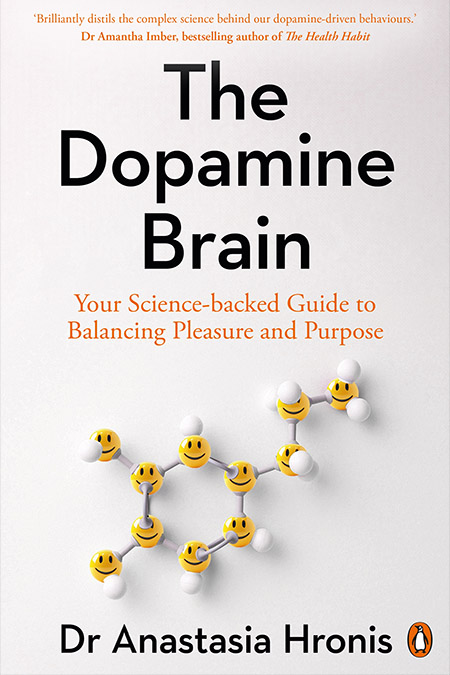
Clinical psychologist and founder of the Australian Institute for Human Wellness Dr Anastasia Hronis lifts the lid on dopamine to help us live by intention, not impulse. A transformative guide to breaking free from impulsive habits and living a more intentional life.
Read More
As the world digitises, children and adolescents are increasingly using digital technologies. These devices offer benefits such as exposure to social contacts and support, potential learning opportunities and access to health promotion material. However, along with these benefits, emerging evidence is indicating that frequent, extended use of digital devices is associated with negative impacts on the health and wellbeing of children and adolescents.
Read More
Although many youth may not be harmed by heavy SMU, distressed youth may be particularly vulnerable. The aim of this study was to experimentally examine the effects of reducing SMU on smartphones on symptoms of depression, anxiety, fear of missing out (FoMO), and sleep in youth with emotional distress. Compared to the control group, the intervention group showed significantly greater reductions in symptoms of depression, anxiety, and FoMO, and greater increases in sleep.
Read More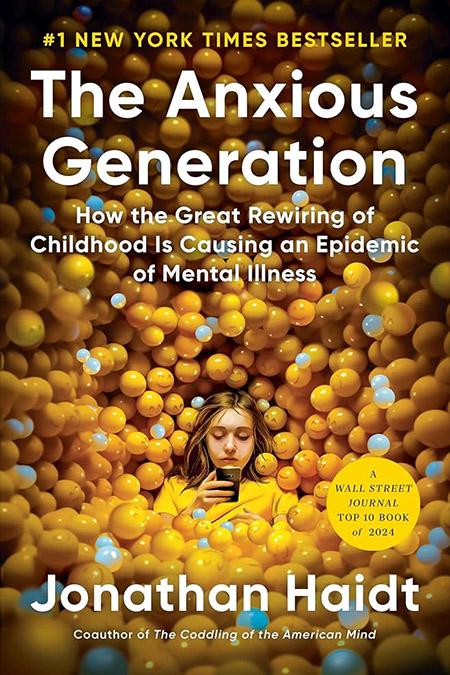
In The Anxious Generation, social psychologist Jonathan Haidt presents more than a dozen mechanisms by which this “great rewiring of childhood” has interfered with children’s social and neurological development, covering everything from sleep deprivation to attention fragmentation, addiction, loneliness, social contagion, social comparison and perfectionism.
Read MoreA brief 4-week intervention using screen time trackers showed that reducing social media use (SMU, experimental group) yielded significant improvements in appearance and weight esteem in distressed youth with heavy SMU, whereas unrestricted access to social media (control group) did not.
Read More
Internet Use Disorders (IUDs) are emerging as a societal challenge. Evidence-based treatment options are scarce. Digital health interventions may be promising to deliver psychological treatment to individuals with IUDs directly in their online setting. The aim of this study was to evaluate the efficacy of a digital health intervention for IUDs compared to a waitlist control group (WCG).
Read More
The survey, which nib conducts annually with global research company, One Picture, canvassed the views of 1,226 parents, step-parents and guardians of children under 18, nationally. This year the survey shows technology use continues to nag at parents, with the real impacts on health and wellbeing increasingly evident. Technology use remains the number one worry for 70% of parents, with 24% ‘extremely concerned’.
Read More
The relationship between social media use and life satisfaction changes across adolescent development. Our analyses of two UK datasets comprising 84,011 participants (10–80 years old) find that the cross-sectional relationship between self-reported estimates of social media use and life satisfaction ratings is most negative in younger adolescents.
Read More
There's a new addiction in New Zealand - more than a third of Kiwis say they are hooked on their screens and many are blaming Covid for it. As the country enters its second week of lockdown, New Zealanders have been averaging five hours of screen time a day on top of using devices for work and school since the Covid pandemic started last year, a new NortonLifeLock study has found.
Read More
This pre-post study recruited 50 adult gamers from New Zealand to test the feasibility of a brief internet-delivered intervention. Completers (n = 35) reported a significant increase in well-being and reduction in severity, intensity, and time spent gaming, which reduced from an average of 29 to 11 hours per week.
Read More
The field of internet addiction has experienced significant debates on conflicting epidemiology. This meta-analysis investigated the prevalence rates of generalized internet addiction (GIA) and internet gaming disorder (IGD).
Read More
As this 60 Minutes report discovers, you can have too much of a good thing. What's being called “Internet Addiction Disorder” is ruining lives and even changing the way our brains process information. Worse still, experts are seeing dangerous signs in toddlers.
Read More
The World Health Organisation (WHO) has officially added video game addiction — characterised by "a pattern of persistent or recurrent gaming behaviour" that "takes precedence over other life interests" — to their International Classification of Diseases (ICD) database.
Read More
This systematic review synthesised evidence on the influence of social media use on depression, anxiety and psychological distress in adolescents. All domains correlated with depression, anxiety and psychological distress.
Read More
Video games have become so good, and provide such a sensory smorgasbord of action and colour, that children are becoming dangerously addicted. They’re playing for days on end, to the exclusion of everything else in their lives, including school, friends and family.
Read More
In the past few years internet addiction (IA) and internet gaming disorder (IGD) have become very frequent, leading to many personality and psychiatric disorders including low self-esteem, impulsivity, poor sleep quality, mood disorder, and suicide. IA has been included in Appendix III of the Diagnostic and Statistical Manual for Mental Disorders (DSM-5) as IGD. In addition, IA leads to many neuroanatomical and neurochemical alterations including cortical thinning of various components of the brain and altered dopaminergic reward circuitry.
Read MoreThe aim of this study was to identify problematic gaming behavior among Finnish adolescents and young adults, and evaluate its connection to a variety of psychological, social, and physical health symptoms. This research emphasized that problematic gaming behavior had a strong negative correlation to a variety of subjective health outcomes.
Read More
/afk - Away from Keyboard explores the relationship between online gamers and the games that they play. It examines the evolution of the World of Warcraft from its infancy to its non-existent conclusion and beyond. Through the lives of several key characters, this film shows the real joys associated with online games while offering an objective look at some of its inherent trappings.
Read More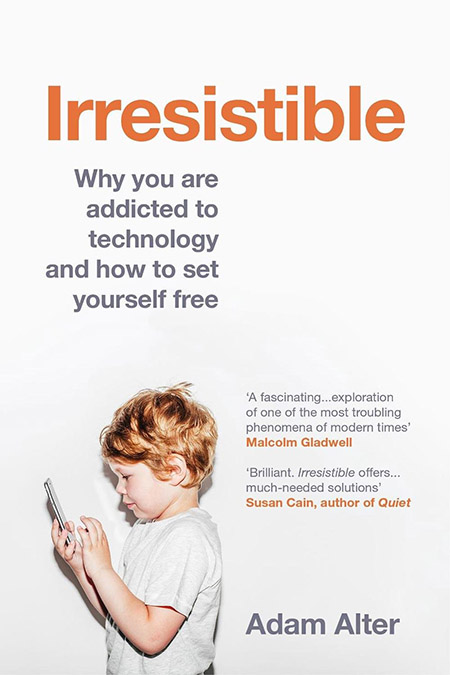
Psychologist Adam Alter provides insight into why we have addiction to technology, explains the science behind why we can't seem to stop such behaviour and offers practical advice for using technology differently, in order to lead a happier life, and to set yourself free.
Read MoreScreen Sense offers personalised one-to-one support to help you better understand your digital habits and make practical, lasting changes to the way you use technology.
Sessions >